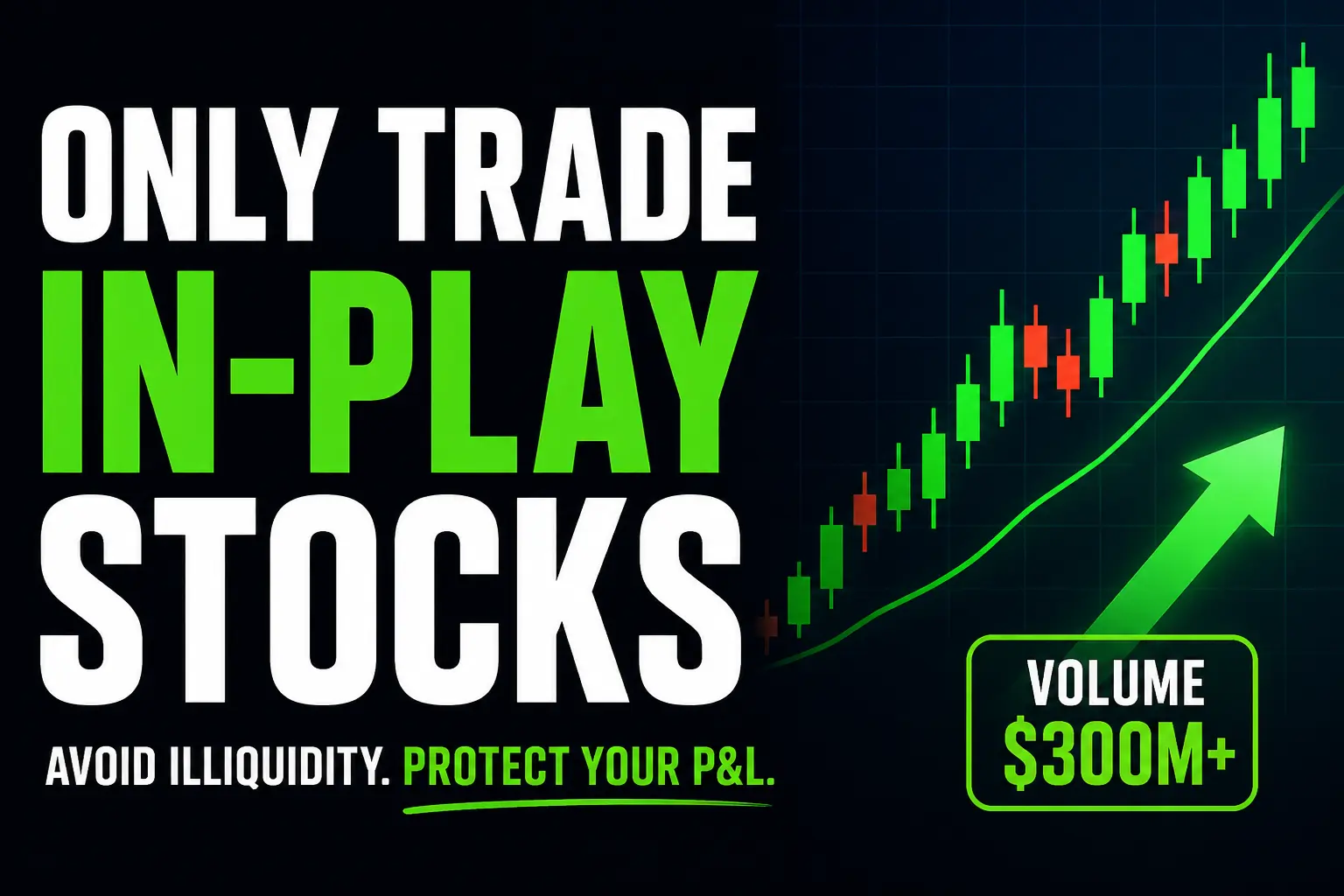
One of the easiest ways to lose more money than you planned is by trading stocks that aren’t actually in play.
I know because I did exactly that this week.
The setups looked decent. The ideas made sense. But I ignored one of my own rules.
The volume simply wasn’t there.
When the trades didn’t work, I couldn’t get out without getting slipped badly. What should have been small losses turned into much bigger ones simply because there wasn’t enough liquidity.
It was a good reminder of why I almost exclusively trade stocks that are truly in play.
Why Liquidity Matters
When a stock is trading heavy volume, everything becomes easier.
- You can enter positions without moving the stock.
- Your spreads are tighter.
- You can scale in or out efficiently.
- Most importantly, if you’re wrong, you can usually get out quickly without taking excessive slippage.
When you’re trading illiquid names, the exact opposite happens.
Imagine you’re long 20,000 shares and suddenly want out.
Maybe there are only a few thousand shares sitting on the bid across multiple price levels. To exit your position, you’re forced to hit every bid available, pushing the stock lower as you sell.
Now you’re losing money not just because the trade failed, but because your own selling is driving the price down.
That’s a terrible position to be in.
Even winning trades can become frustrating because it’s difficult to unload size without affecting the price.
My Minimum Requirements
Everyone has different criteria, but I generally won’t even consider a stock unless it’s trading at least:
- $150 million in dollar volume
- Relative Volume (RVOL) above 1
- Ideally $300 million+ in dollar volume for my favorite setups
If a stock doesn’t meet those requirements, I usually move on.
There are thousands of stocks in the market. There’s no reason to force trades in names that don’t have enough liquidity.
How I Screen For Them
One of the easiest ways to do this is with the Stock Analysis screener.
I simply filter for:
- Dollar Volume > $150M
- Relative Volume > 1
- (Often) Dollar Volume > $300M for my highest conviction trades
Once I have that list, those become the stocks I focus on.
Everything else is mostly noise.
Trading becomes much simpler when you only spend your time looking at stocks that institutions and other traders are actively participating in.
Final Thoughts
One bad habit can quietly cost you thousands of dollars over time.
For me, it’s occasionally convincing myself that a lower-volume stock is “good enough.”
It usually isn’t.
The best traders aren’t just selective about their setups.
They’re selective about which stocks they allow themselves to trade in the first place.
Tool I Use: I use Stock Analysis to quickly filter for liquid stocks before the market opens. Their screener lets you build custom filters for dollar volume, relative volume, price, market cap, and dozens of other metrics, making it easy to focus only on stocks that are actually in play.